

What to Expect
Our worship is Reverent.
When we gather together as Church, we recognize that we are in the presence of God. God is actually among us in His Word and Sacraments, as He promises to be. We want our behavior to reflect this fact. Just as subjects behave respectfully in the presence of royalty, or common folk in the presence of someone important, we conduct ourselves reverently in the presence of Christ our King. When the words of Jesus are proclaimed in the Gospel readings, we stand out of reverence. When the teachings of God are proclaimed from the pulpit, we sit and listen attentively. When the name of the Holy Trinity (Father, Son, and Holy Ghost) is spoken, some of us bow to acknowledge His glory. When the Sacrament of Jesus’ Body and Blood is given in the Lord’s Supper, we humbly kneel at the altar rail. Through our actions we acknowledge that we are wretched sinners, unworthy in ourselves to receive the gifts God gives us. Yet God graciously blesses us with His true presence and furthermore forgives all our sins for the sake of Jesus Christ!
It is Liturgical.
Many would call our worship style “traditional.” We use the term “liturgical.” We greatly respect the traditions of Christians who have gone before us, but that is not our primary motive for using the historic Liturgy. We use the Liturgy because it is the Church’s clear expression of her doctrine (teachings). From the earliest days of the Christian Church, the Liturgy has been the form of worship used by Christians of all times and all places. It is a set and established form of Divine Service, so that God’s gifts are clearly communicated and rightly distributed. While there are certainly variations in the Liturgy across cultures and languages, the essential structure and content of this order of worship have always been the same.
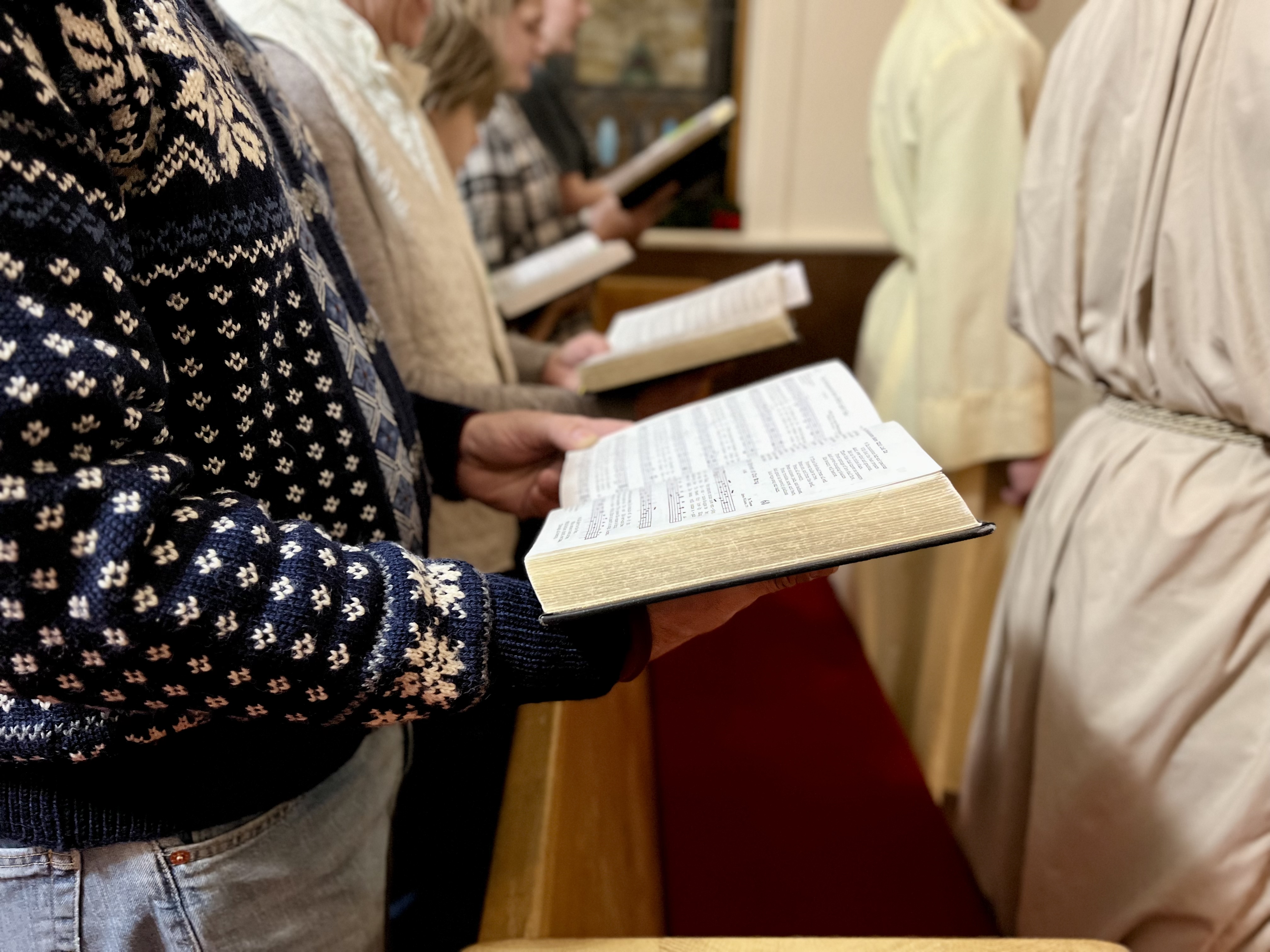
In the Liturgy we approach God as sinners, asking for mercy (Confession), and God graciously takes away our sins (Absolution). We then praise Him with psalms (Introit, Gloria Patri) and call upon Him again for His continuing mercy (Kyrie). With the angels we glorify Him, giving thanks for our redemption through Jesus Christ (Gloria in Excelsis). God then speaks to us through His Word as we hear readings from the Old Testament, an Epistle, and the Holy Gospel. Each reading follows a theme appointed for the day according to historic practice. The pastor preaches on that theme in the Sermon, after which the Church responds with the prayer of the Church (General Prayer, Lord’s Prayer). Finally, communicant members receive Jesus’ Body and Blood in the Lord’s Supper. The Liturgy concludes with a blessing (Benediction) in which God places His name upon His people and sends them out in peace.
And it is Sacramental.
All worship is made up of two things: sacrifices and sacraments. Sacrifices are things we offer up to God, such as prayer, praise, and offerings. Sacraments are things that God gives down to us, such as the forgiveness of sins, faith in the Gospel, and Jesus’ Body and Blood in the Lord’s Supper. In our worship, we focus on the things God gives to us. Without these, nothing we offer up to God would be pleasing to Him! Only after we have been cleansed from sin through the sacraments are we able to praise God and offer up sacrifices with a pure heart.
Weekly Divine Service
We hold the Divine Service every Saturday evening. This is the chief service of the week where our pastor preaches from the Bible and Holy Communion is offered to our communicant members.
Weekly Bible Classes
Our pastor provides weekly Bible classes for all age levels. In the adult classes, we dive deeply into the text of Holy Scripture, examining the context of each verse, bringing insights from the original languages, appreciating the historical context, and interpreting more difficult passages with clearer ones. We supplement our study with selections from the Lutheran Book of Concord, connections to the Liturgy and our hymnody, writings of the Church Fathers, and relevant Church artwork.
In the children’s classes, our pastor focuses on the facts of Holy Scripture and the basic meaning of its important passages. He uses a question-and-answer method to teach them God’s Word and lead them in confessing it. He also drills them in Luther’s Small Catechism so that they memorize the chief parts of the faith. As the children grow in stature and understanding, he asks harder questions and begins to apply Scripture to them more deeply. At the end of their Catechesis, the children are able to confess the six chief parts of the Catechism and are prepared to receive Holy Communion.
Festivals in the Church Year

Besides our weekly Divine (Communion) Service, we offer many additional church services throughout the year. Following the historic Church Calendar, we observe the seasons of Advent, Christmas, Epiphany, Gesima, Lent, Easter, Ascensiontide, Pentecost, and Trinity. In these seasons, we celebrate over two dozen festivals and holy days, including Christmas Eve, Christmas Day, Epiphany, the Baptism of our Lord, Ash Wednesday, Maundy Thursday, Good Friday, the Easter Vigil, the Ascension of our Lord, Michaelmas, and Reformation Day. These festivals are typically celebrated in the evening with a Vespers service which includes a sermon.
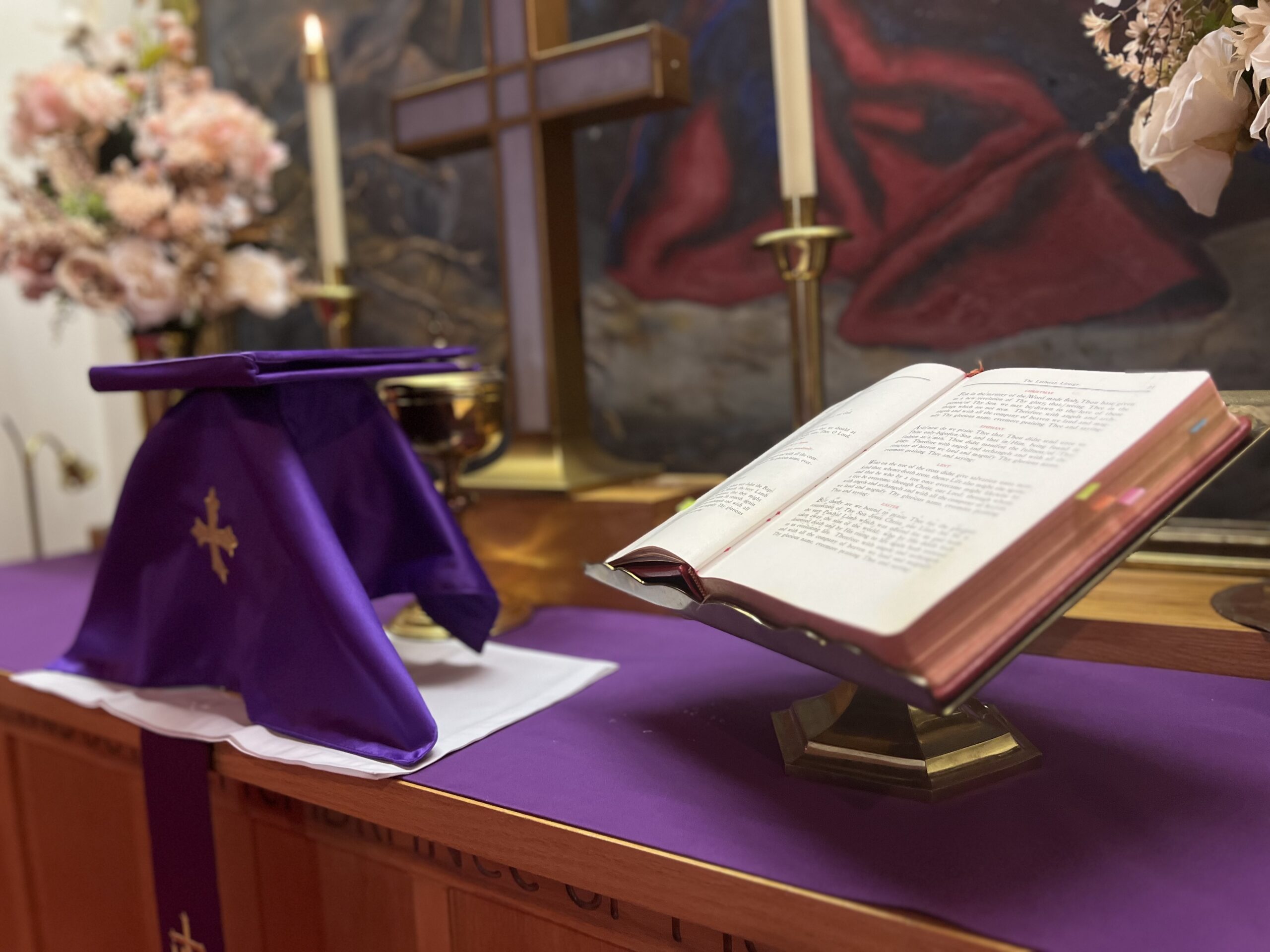
This page is under construction. Thank you for your patience as we update it! Information about our communion practices is coming soon.
What to wear?
Some members dress in “business casual.” Others wear blue jeans. You may of course wear any modest clothing for your devotion.
How long are services?
We don’t watch the clock in church, but we certainly respect the time of members and visitors. The Divine Service (our Saturday evening service) typically lasts 1 hour, 15 minutes. Other prayer services, such as Matins and Vespers take anywhere from 30 minutes to 1 hour.
Do you use a hymnal?
Yes! We use The Lutheran Hymnal (1941) for all our services. The liturgy is followed exactly per the book. We do not use screens or sing contemporary-style praise songs in church.
Do I need to sing?
You are not required to sing, but we encourage it! We are a singing congregation. At this time, our services are all sung a cappella without organ or piano accompaniment. Don’t worry if you’re not a confident singer! You will find plenty of strong voices to hide under and help you along!
Do you follow a lectionary?
Yes! We follow the historic one-year lectionary (schedule of specific Scripture readings) provided in The Lutheran Hymnal (1941). Our pastor almost always uses the weekly Gospel lesson as his sermon theme.
Which Bible translation?
In our church services and Bible classes we chiefly use the King James Version (1611) because of its poetic beauty, its historic value, and because the translators employed a word-for-word (formal equivalence) approach in the translation. We do also utilize other English translations–though we prefer ones not based upon higher critical evaluation of the Scripture texts.
Can I preview something before visiting?
Currently our services are not live-streamed. You are welcome to:
- Listen to our Sermon Podcast
- Download a bulletin